- Published on
Strudel vs Auwen: Which Live Coding Tool Fits Your Performance Style?
- Authors

- Name
- Nes Croft
- @nescroft
Strudel vs Auwen: Which Live Coding Tool Fits Your Performance Style?
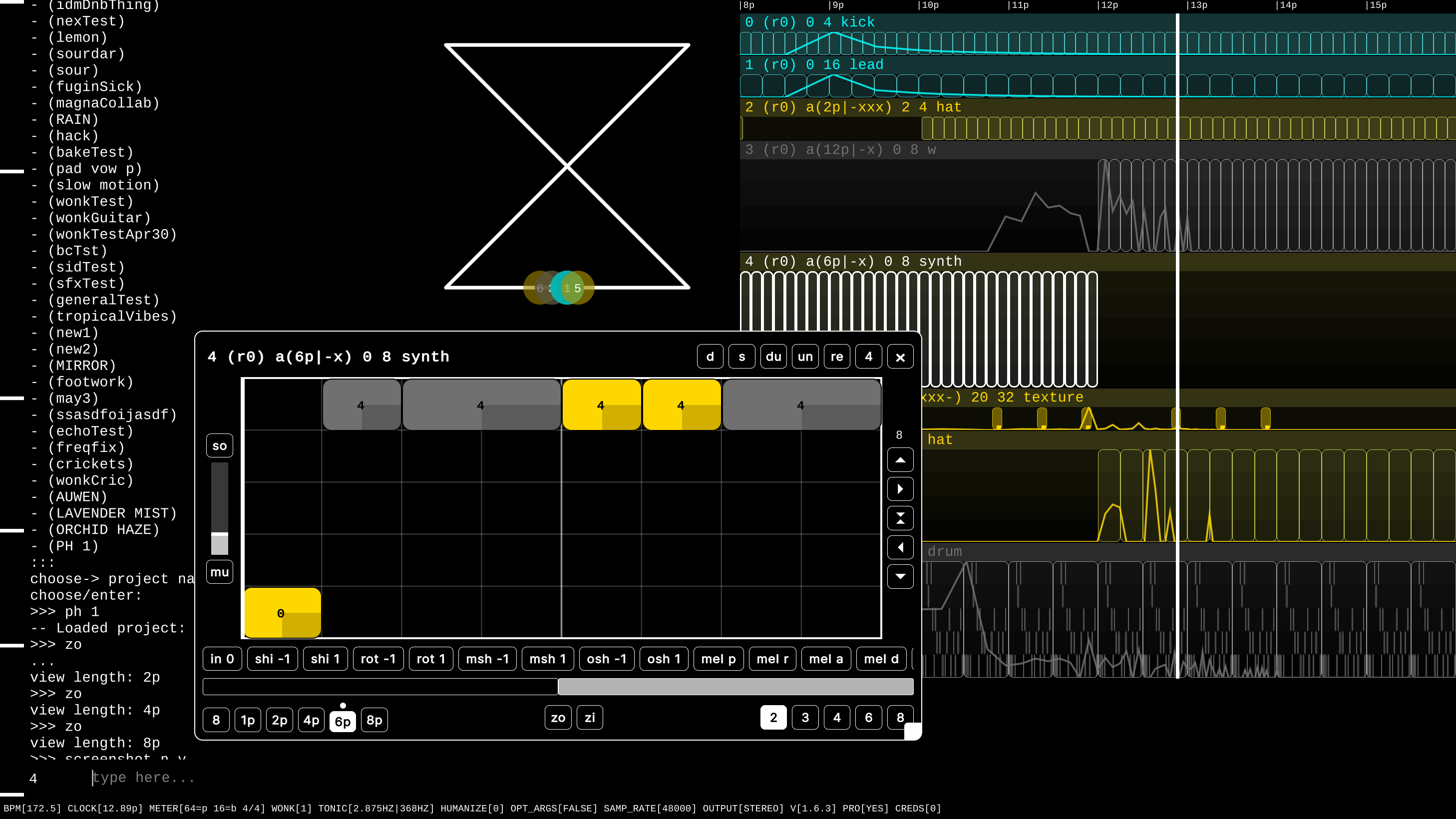 Auwen Interface
If you've spent any time with Strudel, you already know why it's become the go-to entry point into live coding. It's free, it runs in any browser, and you can go from zero to your first loop in minutes. Strudel deserves real credit for that: it's brought more new people into live coding and algoraves than arguably any tool before it, and the community, tutorials, and workshops that have grown up around it are a big part of why this scene is thriving right now. So why did we build Auwen instead of just using Strudel ourselves? Not because Strudel is hard to learn, but because the things that make it approachable also create real limits once you're trying to actually perform in front of people.
The Problem: Strudel Is Easy to Start, Harder to Perform With
Strudel gets a lot right. It's genuinely one of the easiest ways to get into algorithmic pattern music, and that accessibility is a big part of why it's more widely used than Tidal Cycles, the Haskell-based system it's built on. The mini-notation is elegant and genuinely fun to write, sharing a session is as simple as sending a URL, and there's no install step standing between you and your first sound. It's also actively developed and open source, which means anyone can look under the hood, contribute back, and build on top of it - that openness is a real part of why the pattern language keeps getting richer.
None of that changes once you start using Strudel for live improvisation rather than composition, but a few things are worth knowing if that's the direction you're headed:
- No headphone cueing. Strudel doesn't have a way to preview a sound privately before it goes out to the room. Every change you type is a change the audience hears immediately, mistakes included. DJs solve this with cue monitoring; Strudel has no equivalent.
- Web Audio's sound design ceiling. Because Strudel runs entirely on the Web Audio API and Tone.js, the sound design itself is limited. Most people end up routing MIDI out to a full DAW like Ableton or Logic to get sounds that are actually good enough to perform with - which brings back a lot of the setup friction Strudel was supposed to remove.
- No microtonal support. Strudel's pattern language is built around standard 12-note tuning. If you want to explore other scales, you're on your own.
- No advanced sample chopping. Loading a sample into Strudel gives you the raw sample - fitting it to your key and tempo is manual work.
- Custom sound and visuals mean writing raw code, or bringing in another tool. Strudel does let you register your own synths and effects, but that means hand-coding a Web Audio graph in JavaScript yourself. Custom visuals usually mean pulling in a separate live-coding tool like Hydra rather than something built into Strudel itself.
- No built-in recording, mastering, or hosting. If you want to turn a Strudel session into a finished, shareable track, you're capturing it, mastering it, and hosting it yourself with separate tools.
The Solution: Auwen Handles the Live Performance Layer
Auwen starts from the same premise as Strudel - typing short commands to shape music in real time - but is built specifically around the moment of performing rather than the moment of composing. You can preview any sound in your headphones first, exactly like a DJ cueing the next track, so nothing reaches the audience until you're ready for it. Scales and sample tuning are handled automatically: Auwen is microtonal by default and chops samples with algorithms built for it, so anything you load already fits the key and tempo without a separate DAW. Automatic mixing and mastering keep everything sounding balanced as you go, and because the timeline loops forever, you're never forced to stop the music to make a change. On top of that, Auwen ships with built-in visuals for live shows, including the ability to play video as part of your visuals - and if you want to go further, you can write your own custom visual scripts, synthesis scripts, and effect scripts directly in C#, so the sound and show can be extended exactly as far as you want to take them. Auwen also records as you play, so once a set is done you can export the song directly from the app, master it, and get a shareable link on your own artist page - a built-in home for your tracks that works like a cross between Linktree and SoundCloud.
Key Features
- Headphone cueing: Preview any sound privately before it goes live, the same way a DJ cues up a track before dropping it.
- Microtonal by default: Sounds are automatically organized into exotic scales synced to your tempo - no manual retuning or math required.
- Advanced sample chopping: Loaded samples are automatically pitch-shifted and chopped to fit your current scale and BPM.
- Automatic mixing and mastering: Frequency balancing and mastering happen in the background, so a solo performer can put out a polished show without an engineer.
- Infinite looping timeline: Everything loops forever by default, so you stay in flow instead of constantly starting and stopping.
- Multiplayer jamming: Friends can join your session remotely and build music together in real time.
- Command-line interface: Every sound and function is a few keystrokes away, so changes happen as fast as you can type.
- Built-in visuals with custom C# scripting: Auwen comes with live visuals out of the box, including support for playing video as part of your visuals, and you can write your own visual scripts, synthesis scripts, and effect scripts in C# to build a completely custom sound and show.
- Built-in recording and export: Auwen records your set as you play, so you can export a finished song directly from the app - no separate capture software needed.
- A home for your tracks: Master your recording right after you make it and get a shareable link on your own artist page, a built-in ecosystem that works like a cross between Linktree and SoundCloud.
Frequently Asked Questions
What problem does Auwen solve that Strudel doesn't?
Strudel is excellent for learning and composing algorithmic patterns, but it wasn't designed for 2 hour improvised sets alongside professional DJs. Auwen adds the pieces a live performer actually needs: private headphone cueing, built-in microtonal scales, advanced sample chopping, and automatic mixing and mastering - all without needing a separate DAW.
Who should use Auwen instead of Strudel?
If you're learning pattern-based live coding or composing in a browser, Strudel is a great, easy starting point. If you're performing long sets in front of an audience and want to cue sounds privately, explore microtonal scales, and get performance-ready sound design without routing out to Ableton or Logic, Auwen is built for that. Auwen holds up when used alongside DJ's playing premade tracks at clubs and festivals.
When is Auwen the right choice over Strudel?
Auwen is the right choice when the performance itself is the point - DJ sets, algoraves, improvised jams - and you need to preview and shape sound in real time without exposing every experiment to the audience.
Can I use both?
Yes. Many live coders use Strudel to learn pattern concepts and experiment casually, then move to Auwen when they want to actually perform with headphone cueing, microtonal scales, and built-in mixing and mastering.
Isn't Auwen closed source, though?
It is, and that's a completely fair thing to care about - open source has genuinely earned its reputation in this community, Strudel included. It's worth remembering, though, that most live coding setups are already a mix: plenty of open-source pattern code ends up feeding into closed-source gear like Ableton or Logic for the final sound design and mastering, and nobody thinks less of a set for that. Being open source and being performance-ready are just two different qualities a tool can have, and a setup can be great on one axis without being great on the other. Auwen leans into the second one - cueing, microtonal scales, sample chopping, synthesis, effects, and visuals in one place, with C# scripting so you can still shape it yourself - and we think that's a reasonable trade for a tool built around the moment you're on stage.
Conclusion
Strudel earned its popularity honestly - it's the easiest on-ramp into live coding there is, it's brought a wave of new people into this community, and that matters more than any single feature comparison. But easy to start and built for the stage are two different design goals, and it's fine for a tool to be great at one without trying to be the other. Auwen exists for the second one: a command-line instrument with cueing, microtonal scales, sample chopping, and mixing built in, so you can improvise a full performance without leaving the terminal. And the set doesn't have to end when you stop playing - record tonight's session, master it, and have a shareable link to send around before you're even off stage. If you love what Strudel taught you and you're ready to experiment further, try Auwen and hear the difference for yourself.