- Published on
What Are Scala Files? Explore 5000+ Scales from Around the World
- Authors

- Name
- Nes Croft
- @nescroft
What Are Scala Files? Explore 5000+ Scales from Around the World
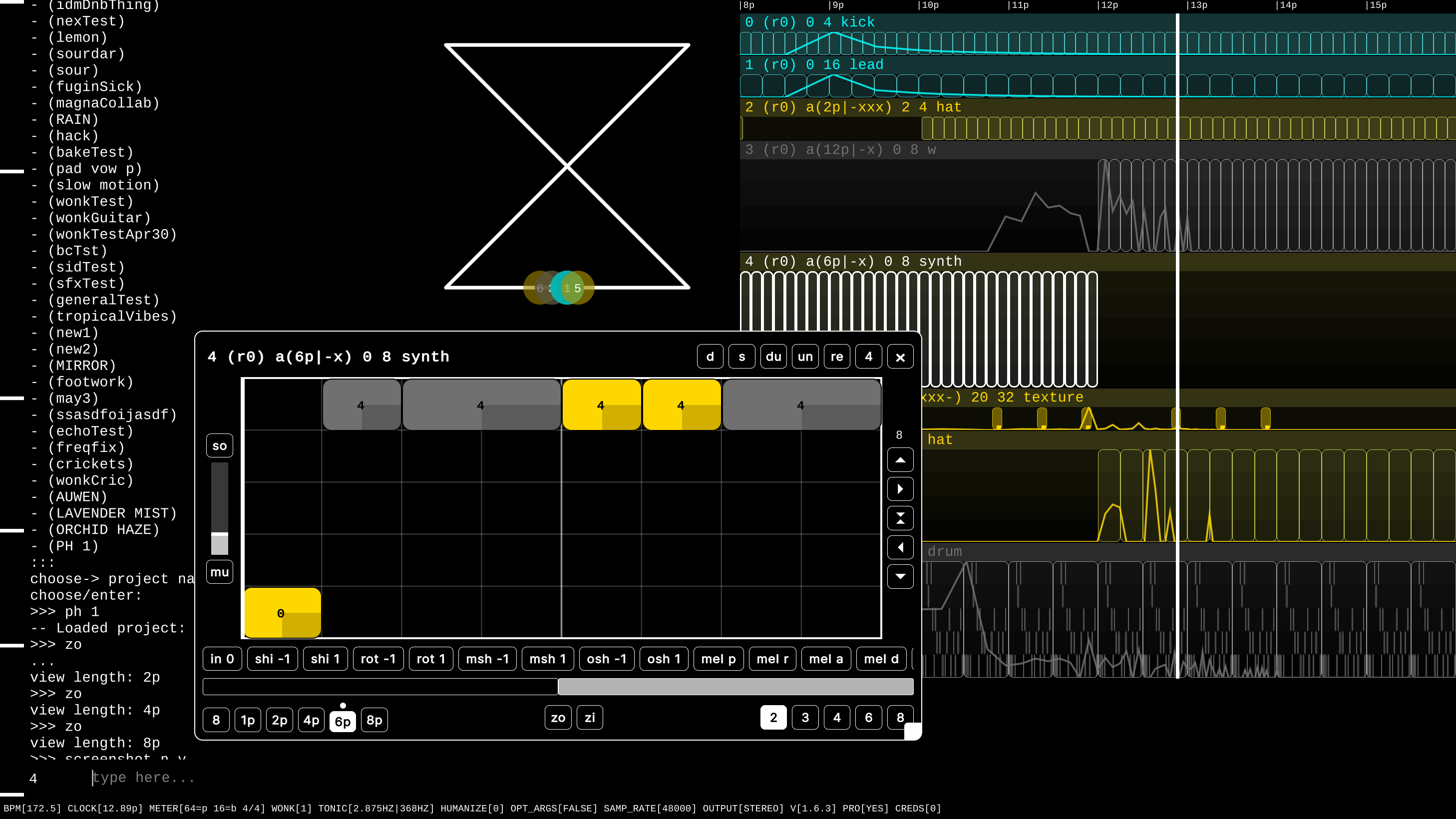 Auwen by Soniare
The Pitch Problem Nobody Talks About
Most music software ships with a single, invisible assumption baked into every note you play: the 12-tone equal temperament grid. Every semitone is identical. Every octave divides cleanly into twelve equal slices. It's universal, practical, and, if you're willing to admit it, a little bit boring.
For centuries before this system was standardized, musicians tuned their instruments differently. Church organs were tuned to ring perfectly in certain keys and sound deliberately harsh in others. Lutenists bent strings to honor pure harmonic ratios. Gamelan ensembles in Java and Bali built instruments that would never play in tune with a Western piano — by design. Singers in Istanbul ornamented melodies with quarter tones that slip between the cracks of the Western chromatic scale entirely.
All of that sonic history, along with centuries of theoretical work, experimental temperaments, and cross-cultural tuning research, has been collected into a single, freely downloadable archive of over 5000 scale files. They're called Scala files, and once you understand them, your relationship with harmony will never be the same.
What Is a Scala File?
A Scala file is a plain text document with the .scl extension that describes a musical scale. Not a melody, not a chord progression — just the raw intervals that define how notes in a scale relate to one another. That's it. Deceptively simple.
The format was created by Manuel Op de Coul, a Dutch software developer and music theorist, and is hosted by the Huygens-Fokker Foundation, a Netherlands-based organization dedicated to microtonal music research. Over time, the .scl format became the universal standard for sharing tuning systems, adopted by synthesizer manufacturers, academic researchers, open-source developers, and experimental musicians worldwide.
What made .scl catch on so widely? Several things. It's completely human-readable. You can open any .scl file in a basic text editor and understand exactly what it contains. It's small — typically just a handful of lines. It's unambiguous. And it's flexible enough to represent everything from a simple pentatonic scale to a complex just intonation system with dozens of notes per octave.
Inside a .scl File: How It Works
Let's crack one open and look at the guts. Here's a real example — a classic 1/4-comma meantone scale, one of the most important historical temperaments in Western music:
! meanquar.scl
! 1/4-comma meantone scale.
! Pietro Aaron's temperament (1523)
12
76.04900
193.15686
310.26471
5/4
503.42157
579.47057
696.57843
25/16
889.73529
1006.84314
1082.89214
2/1
Let's break that down line by line.
Lines starting with ! are comments. They're ignored by software and exist purely for human readability. The first comment line often repeats the filename — a helpful convention so you know what you're looking at if the file gets renamed.
The first non-comment line is a short description of the scale. Here it's blank (meaning the description is empty), but many files include names like "Persian traditional scale" or "Bohlen-Pierce tritave."
The number on its own line tells you how many notes are in the scale, not counting the octave. This scale has 12 notes.
The remaining lines are the pitch intervals. Each one defines how far above the root note that scale degree sits. These values come in two forms:
- Cents: A decimal number (must include a period). Cents are 1/100th of a semitone in 12-TET. 100.000 cents is one standard semitone. 1200.000 cents is one octave. The number 76.049 means "76 cents above the root" — slightly less than a standard semitone.
- Ratios: A number with a slash, like
5/4. This represents a pure harmonic ratio — the mathematical relationship between two frequencies.5/4is a just major third, the "pure" version of a major third as it appears naturally in the harmonic series.
Notice you can mix cents and ratios freely in a single file. The format trusts you to know what you're doing.
The final note — 2/1 — is always the octave. In Western music, 2/1 means the frequency doubles, which is what defines an octave. Some non-octave scales use different final intervals (like 3/1, a tritave), but the vast majority end on 2/1.
That's the entire format. No headers, no binary data, no proprietary encoding. A child learning music theory could write a valid .scl file by hand.
Cents vs. Ratios: Two Ways of Thinking About Pitch
Understanding the two number formats helps you get much more out of the archive.
Cents are a relative, linear measurement. Because they're based on 12-TET, they're intuitive if you've spent any time reading Western music theory. You know instantly that 700 cents is a perfect fifth (in 12-TET). 400 cents is a major third. 600 cents is a tritone. Values above 1200 push you into higher octaves.
Ratios are a different kind of thinking entirely. They describe relationships between frequencies as simple whole-number fractions, and they trace back to the physics of sound itself. When a string vibrates, it simultaneously vibrates at integer multiples of its fundamental frequency — 2x, 3x, 4x, 5x, and so on. These are the overtones, and they're the basis of just intonation.
The ratio 3/2 (a perfect fifth in just intonation) sounds subtly but perceptibly different from 700 cents (a perfect fifth in 12-TET). The just intonation version is 701.955 cents — about 2 cents sharper. That tiny difference is the reason string quartets and vocal ensembles playing without fixed-pitch instruments can achieve a depth of resonance that a piano simply cannot. The beats between the notes disappear. The sound becomes luminous.
Scales built from these pure ratios are called just intonation scales. They often sound more consonant and "alive" than equal temperament in the keys they're designed for, at the cost of flexibility. A just intonation scale tuned for C major might sound quite wrong in G major.
The Story Behind Scala: Manuel Op de Coul and the Huygens-Fokker Foundation
Scala is the work of Manuel Op de Coul, a Dutch software developer and music researcher who built the software as a tool for exploring microtonal tuning systems. The project grew under the umbrella of the Huygens-Fokker Foundation, named after two Dutch scientists whose work touched music and mathematics: Christiaan Huygens (1629–1695), who mathematically investigated 31-tone equal temperament and had a special harpsichord built to demonstrate it, and Adriaan Fokker (1887–1972), a physicist who championed 31-EDO and composed microtonal music himself.
The foundation became the home for serious research into tuning systems that didn't fit inside the 12-TET box. Op de Coul's contribution was to create software that made this research accessible, and then to build and curate an archive of scales that documented not just Western theoretical tunings but traditional scales from cultures around the world.
Over decades of curation — contributed to by researchers, musicians, theorists, and hobbyist tuning explorers — the archive grew. As of the most recent release, it contains well over 5000 individual scale files. The archive has been released in numbered versions (the most recent being version 94, released in March 2026), and each version adds newly documented scales.
The .scl format became a lingua franca in part because of this archive's reputation. Other software adopted .scl support because there was simply no better library of scales in any other format. Today, support for .scl files appears in Ableton Live, Apple Logic, Celemony Melodyne, Native Instruments' Kontakt, VCV Rack, SuperCollider, Max/MSP, and dozens of other applications — including Auwen.
What's Actually in the Archive?
Opening the archive is like stepping into a vast library organized by a friendly but slightly obsessive musicologist. There are sections you'd expect and sections that will completely surprise you. Here's a tour through some of the major categories.
Just Intonation Scales
Just intonation scales are built entirely from pure harmonic ratios, with no tempered approximations. The archive contains hundreds of these, ranging from ancient Greek tetrachords to elaborate modern systems designed by composers like Harry Partch, who built his own 43-note-per-octave instruments to play music that couldn't exist in 12-TET.
Some highlights:
- Ptolemy's Intense Diatonic — a scale described by the Greek mathematician Ptolemy in the 2nd century AD, built from ratios like 9/8, 5/4, and 4/3. It's the ancestor of the modern major scale.
- Harmonic Series segments — scales built directly from the 8th through 16th partials of the harmonic series, meaning every note is a pure whole-number multiple of the fundamental. These scales have a bell-like clarity.
- Partch's 43-tone scale — the tuning system Harry Partch developed over decades for his own instruments, representing the most elaborate just intonation system ever brought to practical performance use.
Equal Division Scales (EDO)
Equal Division of the Octave (EDO) scales divide the octave into equal steps, just like 12-TET — but with different numbers of divisions. The archive contains every EDO from 5-EDO to well beyond 100-EDO, each with its own character.
- 19-EDO sounds eerily close to 12-TET in some ways — it has recognizable major and minor thirds — but its major third is closer to just intonation than 12-TET's major third. Many composers describe it as "12-TET with the rough edges smoothed off."
- 31-EDO was championed by Adriaan Fokker himself. Each step is approximately 38.71 cents — smaller than a quarter-tone — giving it a remarkable ability to approximate pure harmonic ratios like 5/4 and 3/2 more closely than 12-TET. It is audibly indistinguishable from 1/4-comma meantone temperament and has been used by dozens of composers.
- 22-EDO has become popular in modern microtonal music, particularly in the xenharmonic community. It has its own system of "supermajor" and "subminor" intervals that have no equivalent in 12-TET.
- 5-EDO is the closest thing to a Javanese slendro scale in equal temperament — five notes per octave, each 240 cents apart. Music made in 5-EDO can feel ancient, meditative, or deeply alien depending on how it's used.
- 7-EDO divides the octave into seven equal steps. Unlike the Western diatonic scale's seven notes (which are unevenly spaced), 7-EDO spaces them perfectly, producing a scale that sounds familiar but wrong in an intriguing way.
Historical Temperaments
This is where music history gets tangible. Before 12-TET became universal in the 18th and 19th centuries, keyboard instruments were tuned in a variety of meantone and well temperament systems, each making different trade-offs between harmonic purity and transposability.
The archive contains dozens of historical temperaments with precise historical attribution:
- Pythagorean tuning — the oldest Western tuning system, built entirely from stacked pure perfect fifths (3/2 ratios). The major thirds are uncomfortably wide, but the fifths are pure. Medieval music was written in this system.
- 1/4-comma meantone — the dominant keyboard tuning of the Renaissance and early Baroque. Major thirds are pure (5/4 ratio), but some keys are essentially unplayable. It's the tuning Bach's contemporaries heard.
- Kirnberger III and Vallotti temperaments — late Baroque "well temperaments" that allowed playing in all 24 major and minor keys while keeping some keys more colorful and resonant than others. (Kirnberger III dates from 1779 and post-dates Bach, but is closely tied to his school; Kirnberger learned tuning directly from Bach.)
- Werckmeister III — a Baroque well temperament by Andreas Werckmeister (1691), commonly cited as a likely tuning for Bach-era organs and harpsichords. Some scholars believe Bach's Well-Tempered Clavier was composed to highlight the key-color contrasts these unequal tunings produce.
Hearing music played in its original temperament rather than modern 12-TET can be a revelatory experience. Pieces that sound smooth and bland in equal temperament suddenly have brightness and tension. Key changes carry emotional weight that the composer designed into the tuning itself.
World Music Scales
This section alone contains enough material for a lifetime of exploration.
Arabic Maqam: The maqam system is the foundational modal framework of Arabic classical music. Where Western modes use semitones as their smallest interval, maqam uses quarter tones — intervals of approximately 50 cents that slip between the keys of a Western piano. The archive contains dozens of maqam tunings, each with its own name, emotional character, and traditional usage. Maqam Rast, for example, is described as noble and balanced; Maqam Hijaz is associated with longing and the desert; Maqam Saba is considered sorrowful and introspective.
Turkish Makam: A closely related but distinct tradition, Turkish makam uses a 53-division system for theoretical description, with intervals that deviate subtly from both Western 12-TET and Arabic quarter-tone systems. The archive includes traditional makam tunings documented by Ottoman music theorists.
Persian Dastgah: The Persian classical music system organizes its scales (called dastgah) around specific melodic patterns, ornaments, and emotional associations. The archive contains tunings for the major Persian dastgah systems including Shur, Mahur, and Chahargah.
Indian Shruti System: Vedic music theory recognizes 22 shrutis — microtonal divisions of the octave that form the theoretical basis for the thousands of ragas in Hindustani and Carnatic classical music. The relationship between shrutis and specific ragas is complex and debated among scholars, but the archive contains several documented tunings from this tradition.
Javanese Slendro and Pelog: Gamelan music from Java uses two distinct tuning systems that coexist within a single ensemble. Slendro has five tones per octave, with each step roughly 240 cents — wider than any Western interval. Pelog has seven tones but typically uses only five in a given piece, and its intervals are wildly unequal by Western standards. Real gamelan instruments are tuned by ear to local traditions, so every ensemble sounds slightly different; the archive contains multiple documented tunings reflecting this regional variation.
Balinese Pelog: Balinese gamelan uses its own variants of pelog that are distinct from Javanese tunings. The shimmering, beating quality of Balinese music comes partly from pairs of instruments tuned slightly differently from each other on purpose.
Thai and Burmese scales: The Thai classical music tradition uses a 7-EDO-like system that puts equal steps between seven notes in a way that sounds simultaneously familiar and alien to Western ears. Burmese classical music has its own documented scale traditions in the archive.
Experimental and Theoretical Scales
The archive also contains scales invented by modern composers, mathematicians, and music theorists that don't correspond to any traditional music culture. These are the most overtly futuristic contents of the archive.
- Bohlen-Pierce scale: Instead of dividing the octave (2/1), this scale divides the tritave (3/1) into 13 equal steps. It has its own system of consonance and dissonance, and a small community of composers has written music in it for specially built instruments and software. It's completely alien to Western ears at first — and then somehow starts to make sense.
- Wendy Carlos's Alpha, Beta, and Gamma scales: Synthesizer pioneer and composer Wendy Carlos designed several non-octave tuning systems in the 1980s optimized to approximate specific harmonic ratios. The Alpha scale divides the perfect fifth (3:2) into nine equal steps; the result has uncanny resonance while sounding nothing like any traditional music.
- Erlich's decatonic scales: Music theorist Paul Erlich developed 10-note scales in 22-EDO that function analogously to Western diatonic scales but with their own distinctive consonances.
Downloading the Full Archive
The entire archive — over 5000 .scl files — is freely available for download from the Huygens-Fokker Foundation:
Download 5000+ Scala Scale Files (.zip)
The download is a .zip file containing individual .scl files organized roughly alphabetically. The total unzipped size is modest — a few megabytes. Each file is a plain text document you can open in any text editor to inspect before loading it.
The Huygens-Fokker website also maintains a searchable list of scales with descriptions, letting you browse by name or read about a specific tuning before downloading it.
Importing a Scala File into Auwen
Auwen supports .scl files natively through the scale scl command. Once you have the archive downloaded and unzipped, loading any scale into your session takes one command:
scale scl <filepath>
For example, if you unzipped the archive to your Downloads folder:
scale scl ~/Downloads/scales/meanquar.scl
Or on Windows:
scale scl C:\Users\YourName\Downloads\scales\meanquar.scl
Auwen will read the file and make the new scale available for your session. The scale defines what pitches are available — but your sounds' melodies don't shift automatically. To move existing sounds into the new scale you use the msh (melody shift) or mel (melody) commands to reassign notes.
What Changes When You Import a Scale?
The scale itself changes immediately — Auwen now knows the new set of intervals and pitches available. But existing sounds keep whatever melody they had; you need to update them manually. Use msh to shift all the notes in a sound up or down by scale degrees, or use mel to set note positions directly. This gives you precise control over how sounds map into the new tuning rather than having everything shift automatically in a way you didn't intend.
This also means you can import a scale, then selectively move only certain sounds into it — useful if you want drums or a bassline to stay put while pitching melodic elements into the new tuning.
Tips for Exploring the Archive
Start with historical temperaments. Load a familiar piece of music you've made or a simple loop, then swap through different historical keyboard temperaments: Pythagorean, 1/4-comma meantone, Kirnberger III. You'll hear immediately how the same notes carry different emotional weight in different tuning systems.
Try non-12 EDO scales. Load 19-EDO (../19edo.scl or similar), play your existing sounds, and notice where everything sounds almost-but-not-quite right. Then start writing melodies in 19-EDO from scratch and you'll find intervals that have no 12-TET equivalent — new thirds, new color.
Use just intonation for bass-heavy music. Pure harmonic ratios resonate deeply with sub-bass frequencies because the overtones align cleanly. A bass riff in just intonation tuned to the key of your track can have a physical presence that 12-TET approximations simply can't match.
Explore world music scales as starting points. A maqam or raga scale doesn't make your music "Arabic" or "Indian" any more than using pentatonic makes your music "blues." It gives you a vocabulary, and what you do with it is up to you. Start with Maqam Rast or Raga Bhairav and write something completely electronic. The scale will push your melodic instincts somewhere new.
Combine with Auwen's random scale features. After getting comfortable with .scl imports, try scale r (random just intonation) or scale re (random EDO) alongside manual .scl imports as part of your workflow. Having the archive on disk and being able to load any scale instantly creates a very fast workflow for tuning exploration.
Checking What Scale Is Active
To see the current scale's ratios and frequencies at any time:
scale pri
This prints the full scale to the console, showing each note's ratio and its frequency in Hz. It's useful for confirming what you've loaded and understanding how the tuning maps to actual pitches.
Exporting Back to .scl
If you've designed a custom scale in Auwen using scale j (just intonation) or scale e (EDO) and want to save it in .scl format to use in other software:
scale exp
This exports your current scale as a .scl file (along with a .kbm keyboard mapping file), which you can then load in any other software that supports the Scala format.
Why This Matters for Electronic Music Production
The 5000+ scale archive isn't just a museum exhibit. It's a creative arsenal.
Electronic music in particular has a strained relationship with pitch. On the one hand, synthesizers and samplers give producers total control over every frequency. On the other hand, the software grid of 12-TET is so deeply embedded in DAW design that most producers never question it. Pitch is treated as something that just exists, not something you design.
Microtonal scales break that assumption. They make pitch something you think about, choose, and shape. The beats and warmth of just intonation. The alien flavor of non-12 EDOs. The historical color of meantone temperaments. The emotional specificity of maqam and raga. All of it is available in 5000+ files you can download this afternoon and start using tonight.
The Scala archive has been part of the microtonal music world since the 1990s, but it's never been more accessible than it is today. With software like Auwen applying tuning globally and in real time, the barrier between "knowing about these scales" and "actually making music in them" has essentially disappeared.
Further Reading and Resources
The Huygens-Fokker Foundation maintains extensive documentation on their site, including theoretical background on dozens of the scales in the archive:
- Scala Home Page and documentation
- Full list of scales with descriptions
- Scala file format specification
For further exploration of microtonality and its use in contemporary music production, the xenharmonic community at xenharmonic.wikispaces.com is a rich resource. Composer and producer Sevish has written extensively about using microtonal scales in electronic music production and offers freely downloadable tracks and tutorials.
Getting Started Right Now
Here's a practical starting sequence for your first microtonal session in Auwen:
- Download the archive and unzip it somewhere you'll remember
- Open Auwen and load a few sounds with
sorps - Set a familiar starting point with
scale ke major(known EDO major) orscale ke minorto get a standard major or minor scale before importing something exotic - Run
scale scl <path-to-any-scl-file>to load a scale from the archive - Use
mshormelon your sounds to move their notes into the new scale - Try three or four different
.sclfiles from the archive, listening carefully each time - When you find something that catches your ear, build around it
The first time a just intonation scale locks into a bass line and the whole mix suddenly opens up, you'll understand why composers, theorists, and experimenters have been obsessing over these files for decades.
Five thousand scales. Pick one and start somewhere new.